Jungle safari exploring biodiversity hotspot of Dandeli Wildlife Sanctuary
Tips & Tricks12 December 202510 min read

Dandeli Safety Guide: Practical Tips for Forest & River Trips

GuideTips & Tricks

Dandeli Safety Guide: Practical Tips for Forest & River Trips

Dandeli Safar team welcomes you to plan this trip with our experts.

Share your dates and group size for a tailored stay, activities, and travel plan.

Plan with Dandeli SafarDandeli Safar team can tailor dates, stays, and activities for this theme.

This Dandeli Safety Guide condenses field-tested, practical steps visitors and organisers can apply to reduce preventable incidents across travel, river activities, forest visits and on-site behaviour. It is deliberately operational: checklists to run through before departure, simple verification questions to ask suppliers, and short, repeatable emergency steps so small teams and families can act calmly if an incident occurs. The guide does not replace formal operator briefings or medical advice—it complements them with clarifying actions that make bookings and on-ground days more resilient. Pre-trip checks matter. Confirm vehicle fitness for long drives (tyre condition, brakes, spare tyre and jack), share accurate passenger medical notes (medicines, allergies, recent conditions) with the property so rooms and activities can be matched to needs, and request clear transfer windows to avoid last-minute night ghat driving where feasible. Pack a compact first-aid kit with labelled personal medicines and a laminated emergency-contact sheet (property manager, local clinic, nearest ambulance number and your off-site contact). For groups, nominate one communications lead responsible for headcounts, local calls and liaising with staff. River and water protocols are unambiguous: always wear a certified life jacket and helmet supplied by the operator, attend the safety briefing, and disclose any medical or mobility concerns to the guide before boarding. Ask providers for basic written assurances: guide-to-guest ratios, equipment maintenance cadence, on-site rescue capability and whether guides carry throw-bags or radio/phone comms. If uncertain, prioritise sessions flagged as 'authorised operator' or 'forest department-approved' and avoid unsanctioned launches. Forest and wildlife rules are focused on reducing disturbance and personal risk: stay on marked trails, keep noise low during drives and walks, avoid feeding or approaching animals, and follow guide directions at all times. Learn to read basic trail markers and local hazard signage; if a route seems unclear or hazardous (recent landslip, washed bridge, dense fog), postpone or choose a safer alternative. For treks, use closed, grippy footwear and carry basic navigation aids (offline map, compass) plus a charged power bank for emergencies. On-campus routines reduce everyday risk: use headlamps or torches after dark on unlit paths, supervise children near water edges or steep slopes, and clarify emergency procedures at check-in (where is the medical kit, who to call, and what the nearest clinic is). The guide provides a compact first-aid checklist (adhesive bandages, antiseptic wipes, blister plasters, pain relief, antihistamine, oral rehydration salts and prescription copies) and suggested supervision ratios for mixed groups during high-risk activities. If an incident occurs, stabilise the person using basic first-aid, alert property staff, and use pre-shared contacts to coordinate transfer to local medical care. For serious cases follow staff instructions for evacuation and, where needed, call emergency services. Seasonal guidance covers monsoon hazards (slippery trails, fast flows) and heat risks (hydration planning, midday rest slots), with simple mitigations to reduce exposure and maintain program continuity. The tone is pragmatic and non-promotional: follow these checklists to set realistic expectations, communicate clearly with operators, and create safer, repeatable experiences in Dandeli's forests and rivers.

How to Think About Safety in Dandeli

Most Dandeli trips are uneventful from a safety perspective when travellers follow basic guidelines from local staff and authorities.

This guide does not replace official instructions but helps you arrive prepared with the right mindset.

Road Travel & Arrival

Safety starts before you reach Dandeli.

  • Avoid driving when extremely tired; consider shared driving for long routes
  • Plan fuel stops and daylight arrival where possible
  • Use offline maps or printed directions in case of weak network
  • Check vehicle brakes, tyres, and lights before night driving

River & Water Activity Safety

River experiences are a major draw in Dandeli and should always be handled with care.

  • Always wear life jackets from authorised operators: /assets/activities/water-rafting-1.webp
  • Listen carefully to safety briefings and ask questions if unclear
  • Avoid alcohol before water activities
  • Respect seasonal closures or restrictions announced by authorities

Forest & Wildlife Awareness

Dandeli is a forest destination; wildlife and terrain deserve respect.

  • Stay with authorised guides on treks or nature walks: /assets/activities/trekking.webp
  • Do not approach or feed wild animals
  • Keep noise low during safaris and forest drives
  • Follow instructions from forest department staff without argument

On-Campus Safety Basics

Most time is usually spent on campus; many simple habits help.

  • Use marked walkways and lit paths at night: /assets/activities/bonfire.webp
  • Supervise children near water bodies and edges
  • Keep footwear handy for walking on uneven or natural surfaces
  • Clarify emergency contact numbers at the property during check-in

How Dandeli Safar Communicates About Safety

When you contact Dandeli Safar, you can ask safety-related questions along with regular trip planning.

  • Request clarity on activity age limits and common restrictions
  • Share medical conditions that planners should be aware of
  • Ask how weather or river levels might affect your dates
  • Discuss realistic options instead of forcing high-intensity plans for everyone

Frequently Asked Questions

Is rafting in Dandeli completely risk-free?

No outdoor activity is completely without risk. However, choosing authorised operators, following instructions, and respecting official closures significantly reduces avoidable problems.

Can children participate in all activities?

Each activity has its own age and safety guidelines. During enquiry, you can share ages so that only age-appropriate options are suggested.

What should we do in case of a medical issue during the trip?

Inform the property staff immediately so they can coordinate first steps and connect you to local medical care if needed. Carrying essential medicines and prescriptions is equally important.

Ready to Plan Your Dandeli Trip?

Get tailored dates, stays, and activity slots from the Dandeli Safar team.

Contact Us Now
Related Articles

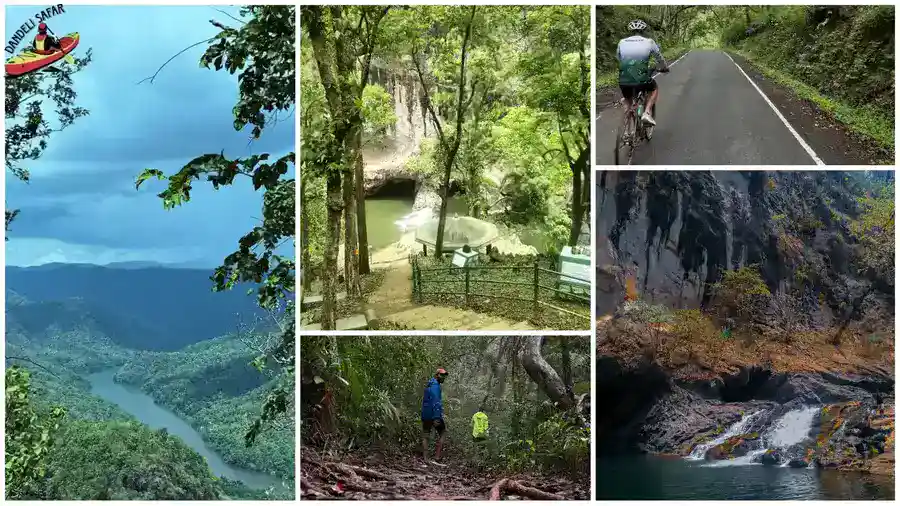
Trekking and cycling adventure near Syntheri Rocks in Dandeli forest

Solo Trip to Dandeli: Safety, Budgeting, and Meeting Fellow Travellers

Solo travel to Dandeli is an invitation to design a trip that balances independence with accessible, low-friction support systems—ideal for travellers who want to move at their own pace while keeping safety, budget and social opportunities in view. This guide outlines how to plan a confident solo itinerary in Dandeli, including choosing campus-style properties that cluster activities, meals and logistics; practical communication and contingency habits that reassure friends and family back home; budgeting approaches to get more value from shared activities; and simple social strategies for meeting fellow travellers when you want company. It starts with how to pick a stay: properties that maintain staffed reception hours, provide clear pick-up and drop-off arrangements, and offer lockers or in-room safes are practical anchors for solo trips. The excerpt then describes sample day plans—early-morning guided birding or short treks when light and wildlife sighting chances are best, mid-morning workshop or quiet reading time, late-afternoon water activities such as kayaking or gentle rafting with vetted operators, and relaxed evenings for stargazing or small-group dinners. Digital and medical preparedness are covered with actionable tips: download offline maps for Ganeshgudi and Anshi stretches, carry portable battery packs and multipurpose SIMs or roaming options where required, set up periodic location-sharing for long treks, and register emergency contact details with the property and your national embassy if you’re an international traveller. Budgeting guidance shows typical price bands and how to reduce per-activity costs by joining scheduled batches or sharing operator bookings; it explains the tradeoffs between dorm-style commando cottages (more social, lower-cost) and single-room cottages (higher privacy). Social integration advice is practical and consent-first: list interests at booking to be paired into relevant activity batches, use communal spaces like bonfires or evening stargazing to meet people, and respect others’ quiet time. Safety sections explain how to evaluate operator records, request female-only or mixed-gender activity groups on arrival, and confirm first-aid and transport protocols for emergencies. The excerpt closes with a short checklist for departure: printed and digital copies of key contacts, insurance details and simple packing reminders—lightweight rain layers, sturdy sandals, a small daypack, insect repellent, and a basic first-aid kit. Keywords: solo travel dandeli, dandeli safety for solo travellers, dandeli solo itinerary, solo trip packing. Contact guidance is conservative: “Check availability and group match options” rather than absolute guarantees—consistent with agent responsibilities and ad compliance. Overall, the expanded excerpt is written to be helpful, practical and search-friendly for users planning a safe, sociable and budget-aware solo trip to Dandeli.

Nature walk through Western Ghats trails in Dandeli

Dandeli School Excursion: Educational Nature Trip for Students

Planning a school excursion to Dandeli is an opportunity to take students out of the classroom and into living ecosystems—this extended guide focuses on clear learning outcomes, supervision protocols, and practical logistics so teachers can run safe, curriculum-linked trips. It outlines sample itineraries tailored to different age groups, safety checklists and adult-to-student ratios, recommended activities that emphasise observation and reflection rather than risk, and budget-friendly choices that keep the focus on learning rather than expensive extras. Learning outcomes and structure: Define learning goals first—biodiversity observation, river-systems awareness, or community-ecology studies. A typical 2-night, 3-day structure includes travel and orientation on Day 1, a full activity and learning day on Day 2 (guided nature walk, simple ecology workshop, supervised water-edge observation), and a reflection-and-departure Day 3. Adjust activities for age and mobility: younger groups get campus-based nature games and short walks while older students can handle longer treks and basic field exercises. Safety and supervision: Clear adult-to-student ratios are essential and vary by age—confirm supervision roles early and allocate responsibilities for headcounts, medications, and emergency contacts. Share medical summaries and any dietary requirements before travel. Choose activities that have demonstrable safety practices and trained guides; water sessions should always be supervised and use life jackets where recommended. Logistics and budgeting: Keep groups together with dedicated transport and clear timetables. For cost control, select simple stays with group meal plans and limit highlight activities to one or two high-value sessions. Properties that host school groups often provide structured packages with educational programming—ask about group rates and what is included in terms of guides and materials. Curriculum ties and post-trip outputs: A school excursion becomes more valuable when it ties back to classwork—plan a small field notebook exercise, photo-documentation assignments or a reflection circle on the final day where students present quick learnings. These activities help teachers evaluate outcomes and extend the trip into classroom learning. Why Dandeli is suitable: The Western Ghats setting offers hands-on exposure to forest and river systems close to accessible properties that support school logistics. With careful planning, a Dandeli school excursion can be a safe, memorable learning experience that supports educational goals and nurtures curiosity for the natural world.

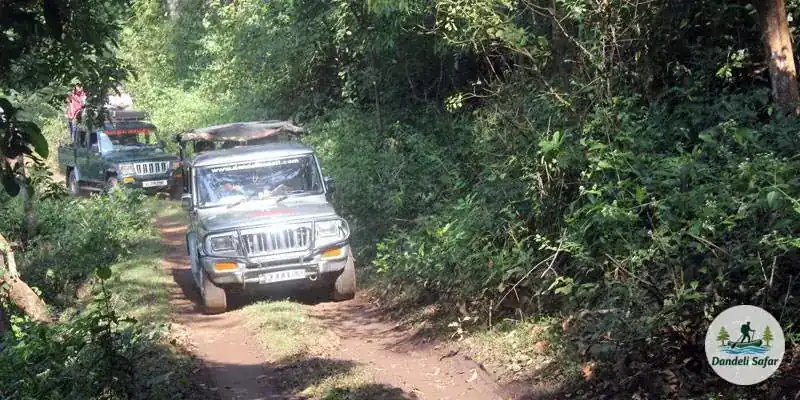
Jeep safari through dense Dandeli forest trails for wildlife spotting adventure

Dandeli Wildlife Guide: Species Checklist, Habitats, and Ethics

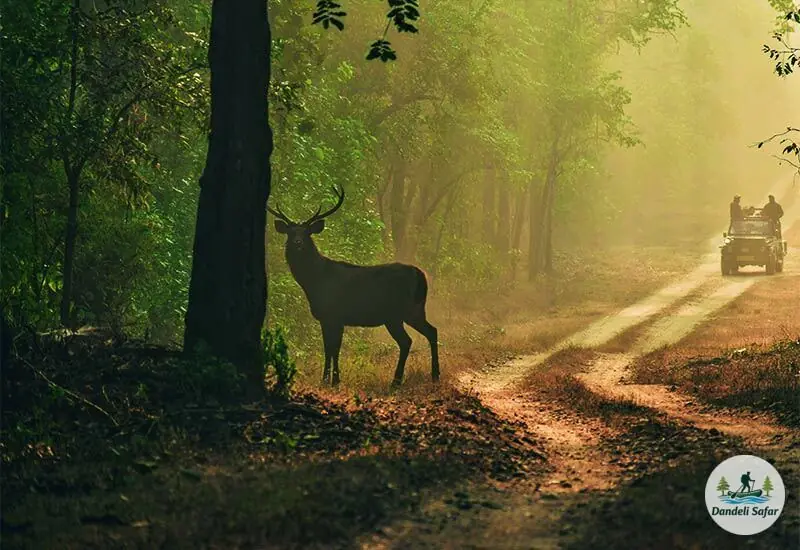
This Dandeli Wildlife Guide is a practical, conservation-first resource for visitors who want repeatable, low-impact ways to observe wildlife around the Kali Tiger Reserve and neighbouring forest tracts. The extended excerpt translates habitat context into field-ready advice: understand the main habitat zones (riverine banks, moist deciduous canopy and rocky outcrops), set realistic expectations for sightings, and prioritise ethical viewing practices and appropriate equipment—binoculars, field notes, neutral clothing and quiet observation techniques—rather than chasing improbable encounters. Operationally, the guide explains how authorised safaris and guided walks are organised, why staying inside vehicles or at designated viewpoints benefits animal welfare, and which seasonal windows concentrate animal activity near water. It provides actionable tips on where to position yourself for dawn and dusk views, how to read animal signs (tracks, droppings and alarm calls), and which routes historically favour herbivore sightings versus canopy bird activity. A concise species checklist covers commonly observed mammals (gaur, spotted deer, sambar), birds (Malabar and greater hornbills, drongos, woodpeckers) and reptiles (monitor lizards, marsh crocodiles), with a reminder that wildlife encounters remain probabilistic and improve with multiple outings across different routes. Ethical conduct is central: keep distance, avoid flash photography, follow naturalist and guide instructions, do not feed wildlife, and respect closure notices for breeding or restoration zones. Photography guidance recommends telephoto lenses, silent camera modes, and patient framing that does not prompt vehicles to chase animals. For birdwatchers and families, the guide includes short, timed walk templates for dawn birding and child-friendly viewing points with accessible approaches. Conservation linkage and visitor impact are practical, not performative—report rare sightings responsibly to reserve authorities, reward careful guiding with constructive feedback and appropriate gratuities, and choose operators who follow forest department rules and contribute to local conservation efforts. Seasonality notes advise when to prioritise safaris (post-monsoon to pre-monsoon) versus river-based activities, and contingency planning recommends alternative educational experiences—village eco-visits, river viewpoint sessions, or naturalist talks—when core zones are closed. The goal is concrete: give travellers the questions to ask before booking (permit needs, vehicle capacities, guide qualifications), checklists for packing and timing, and the field behaviours that create safer, repeatable wildlife experiences while supporting habitat protection and local livelihoods. The tone remains factual and verifiable—no sensational promises—so visitors can plan trips that are respectful, educational and resilient to changing field conditions.

Real Nature, Real Adventure

Explore Dandeli with Us

50% OFF White Water Rafting

Exclusive discount when booked with any resort package

600300/personSAVE ₹300