World Forest Day in Dandeli is an opportunity to pair nature appreciation with responsible action—this expanded, operational excerpt turns broad conservation themes into concrete visitor behaviours, booking checks and low-impact activity templates so small groups can celebrate forests while supporting local livelihoods and habitat protection.
Begin by understanding the ecological context: Dandeli's forests are part of the Western Ghats biodiversity hotspot, with layered canopies, endemic flora and fauna, and important watersheds that feed rivers downstream. Translating that context into visitor practice requires choosing licensed guides, following reserve protocols, and preferring activities that educate rather than disturb—guided tree-identification walks, small-group canopy or viewpoint visits, ranger talks that explain current conservation work, and supervised photography sessions that avoid nest disturbance.
Permits and operational checks matter: before you book, confirm whether a forest permit or entry pass is required for your chosen route, reserve guided slots for specialist trails, and verify access windows that avoid sensitive breeding or restoration zones. Pack for a low-impact visit—long sleeves for sun and insects, sturdy closed shoes for uneven forest floors, binoculars, a refillable water bottle, and a compact first-aid kit. Seasonal notes in the guide explain when trail conditions favour visibility (post-monsoon green corridors vs. dry-season sightlines) and when trails become slippery or restricted.
Community engagement should be practical and respectful: attend ranger talks and community-led interpretation sessions, support village-run eco-initiatives chosen by the reserve, and prefer operators who transparently contribute to conservation efforts. Low-impact rules are simple—stay on marked paths, avoid playback of bird calls unless led by an expert, do not remove plant material, and carry out all trash. For families, build in rest windows and choose child-safe, interpretive activities rather than unguided exploration.
The excerpt provides sample World Forest Day itineraries that balance learning with minimal disturbance: an early guided walk focused on tree and bird identification, a midday conservation talk or nursery visit where local reforestation projects are explained, and a late-afternoon canopy or viewpoint session that emphasises quiet observation. Each itinerary includes a contingency alternative such as a village craft visit or indoor naturalist talk if weather or trail closures arise.
The tone is factual and verifiable—no promotional language—so readers get repeatable checklists: booking and permit questions, packing essentials, ethical field behaviours, and community engagement options that channel visitor interest into positive conservation outcomes. These steps make a short World Forest Day visit safe, educational and genuinely supportive of the region's conservation priorities.
What is World Forest Day?
The International Day of Forests, observed on March 21st each year, celebrates the vital role forests play in sustaining life on Earth. Established by the United Nations in 2012, this day raises awareness about forest conservation and the importance of all types of woodlands.
Dandeli, nestled in the Western Ghats biodiversity hotspot, offers an ideal destination to experience and celebrate forests firsthand. The region's dense jungles, diverse wildlife, and conservation efforts make it a living classroom for understanding forest ecosystems.
Dandeli's Forest Ecosystem
The forests around Dandeli represent some of India's most biodiverse landscapes. Part of the Western Ghats, recognized as a UNESCO World Heritage Site, these forests support incredible variety of life.
- Forest type: Moist deciduous and semi-evergreen
- Protected area: Dandeli Wildlife Sanctuary (834 sq km)
- Part of: Dandeli-Anshi Tiger Reserve
- UNESCO status: Western Ghats World Heritage Site
- Rainfall: 2000-4000 mm annually supports lush growth
- Elevation: Ranges from 60 to 760 meters
- Tree species: Teak, rosewood, bamboo, and hundreds more
- Canopy layers: Multiple forest strata supporting diverse habitats
Why Western Ghats Forests Matter
The Western Ghats are older than the Himalayas and contain exceptional biodiversity found nowhere else on Earth.
- Biodiversity hotspot: One of only 36 globally recognized
- Endemic species: Over 325 globally threatened species
- Water source: Rivers originating here support millions
- Carbon sink: Forests absorb significant atmospheric carbon
- Rainfall patterns: Forests influence monsoon behavior
- Medicinal plants: Traditional medicine depends on forest species
- Tribal heritage: Indigenous communities have forest-based cultures
- Economic value: Supports timber, tourism, and forest products
Forest Experiences in Dandeli
Celebrate World Forest Day by immersing yourself in Dandeli's jungle through various activities.
Nature Walks and Treks
Walking through the forest offers intimate encounters with nature.
- Guided nature walks with trained naturalists
- Learn tree and plant identification
- Spot birds in forest canopy
- Trek to Syntheri Rocks through forest trails
- Early morning walks for best wildlife activity
- Photography walks for nature enthusiasts
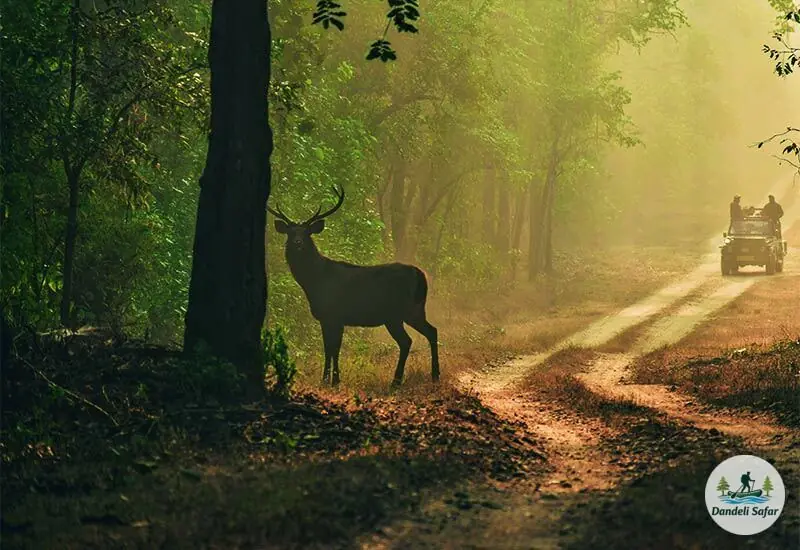
Jungle Safari
Explore deeper into the forest with vehicle safaris.
- Jeep safaris through Dandeli Wildlife Sanctuary
- Spot elephants, gaur, deer, and if lucky, big cats
- Morning and evening slots for different experiences
- Experienced guides share forest knowledge
- Cover larger areas than walking
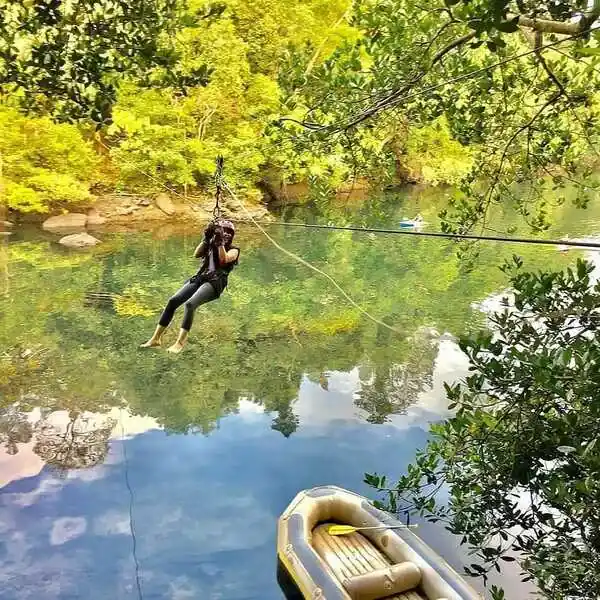
Canopy Activities
Experience the forest from above ground level.
- Zip lining over forest canopy
- Tree top views of the jungle
- Spot canopy birds like hornbills
- Unique perspective on forest structure
Visual Highlights
Glimpse the forest wonders of Dandeli.
Kali River through forest
Forest Wildlife to Spot
The forests of Dandeli support remarkable wildlife diversity.
- Malabar Giant Squirrel: Colorful canopy dweller
- Indian Elephant: Forest corridors support herds
- Gaur (Indian Bison): Largest wild cattle species
- Black Panther: Melanistic leopards in these forests
- Sloth Bear: Rocky forest areas are habitat
- Malabar Pied Hornbill: Iconic forest bird
- Great Hornbill: Larger cousin in dense canopy
- Flying Squirrel: Active at dusk in tall trees
- King Cobra: Forest floor predator
- Over 300 bird species call these forests home
Forest Conservation in Dandeli
Understanding conservation efforts helps appreciate the work being done to protect these forests.
- Tiger Reserve status: Highest protection level in India
- Anti-poaching patrols: Regular monitoring of forest
- Wildlife corridors: Connecting fragmented habitats
- Community involvement: Local villages in conservation
- Eco-tourism: Sustainable tourism supports protection
- Research: Scientific studies on forest health
- Reforestation: Planting in degraded areas
- Fire management: Prevention and rapid response
March Weather for Forest Visits
Late March often offers good conditions for exploring Dandeli's forests.
- Temperature: 22-35 degrees Celsius
- Humidity: Moderate, increasing towards summer
- Rainfall: Dry season, easy trekking conditions
- Visibility: Good for wildlife spotting
- Deciduous trees: Some leaf fall improves sightlines
- Best timing: Early morning (6-9 AM) and late afternoon (4-6 PM)
- Carry water: Stay hydrated in warming weather
Sample World Forest Day Itinerary
A forest-focused experience for March 21st, 2026 in Dandeli.
- Day 1 Afternoon: Arrive, check-in, orientation walk
- Day 1 Evening: Sunset nature walk, spot evening birds
- Day 1 Night: Bonfire with forest conservation discussion
- Day 2 (Mar 21): Early morning jungle safari at 6:00 AM
- Day 2 Morning: Breakfast, rest, tree planting activity
- Day 2 Afternoon: Zip lining for canopy views
- Day 2 Evening: Nature photography walk, World Forest Day celebration
- Day 3 Morning: Bird watching trek, checkout by noon
Responsible Forest Tourism
Celebrate forests by being a responsible visitor.
- Stay on marked trails to protect undergrowth
- No littering - carry back all waste
- Avoid making loud noises that disturb wildlife
- Do not pluck plants or flowers
- No feeding wild animals
- Use reusable water bottles
- Choose eco-friendly resorts
- Support local guides and communities
- Share your experience to spread forest awareness
How to Plan Your Visit
Contact Dandeli Safar to arrange a World Forest Day experience with forest-focused activities and eco-friendly stays.
- Browse forest resorts: /resorts
- March availability: Book 2-3 weeks in advance
- Group packages: Special rates for nature clubs
- School trips: Educational forest programs available
- Photography tours: Specialized forest photography
- Multi-day packages: Deeper forest exploration