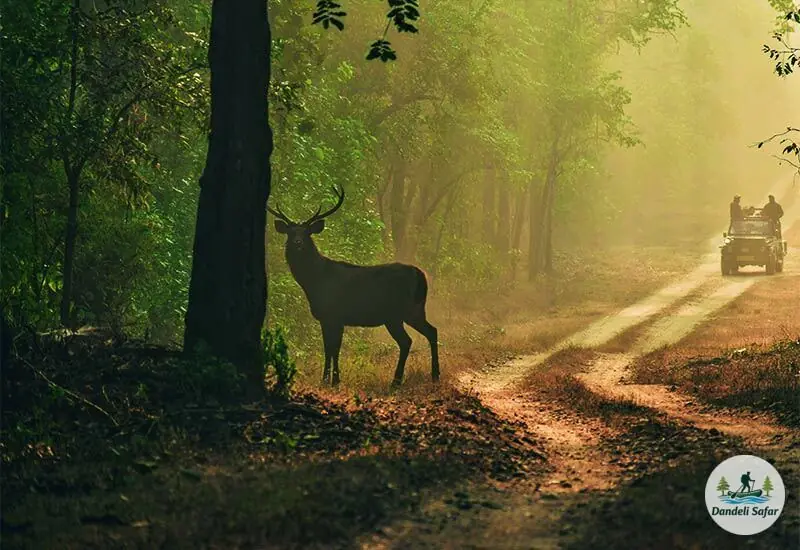
Jungle safari exploring biodiversity hotspot of Dandeli Wildlife Sanctuary
Travel Guide12 December 20257 min read

World Nature Conservation Day 2026 in Dandeli: Western Ghats Escape

Guide

Dandeli Nature Conservation Day

Nature Day greetings-observe, not disturb, while you explore Dandeli.

Hire local guides, keep to trails, and leave every spot clean.

Plan nature tripDandeli Safar team can tailor dates, stays, and activities for this theme.

Use World Nature Conservation Day as an excuse to slow down in Dandeli. Learn about Western Ghats forests, wildlife, and simple ways travellers can support conservation while enjoying their holiday.

Why Dandeli for World Nature Conservation Day?

World Nature Conservation Day on July 28th encourages people to understand and protect natural resources. Dandeli sits inside the Western Ghats, one of the world's eight hottest biodiversity hotspots, making it a meaningful place to mark this day.

Here you see how forests, rivers, birds, mammals, and local communities are linked. A carefully planned trip turns your holiday into a gentle nature-learning experience without feeling like a classroom.

Learn About Western Ghats Ecosystems

Use your Dandeli visit to observe how different habitats support different species.

  • Evergreen forests: Tall trees, dense canopy, moist undergrowth
  • Riverine zones: River banks and backwaters that support birds and reptiles
  • Open grass patches: Grazing spots for herbivores and butterfly-rich clearings
  • Plant diversity: Medicinal plants, climbers, epiphytes, and shrubs
  • Human-nature link: Villages, plantations, and eco-tourism operations around the forest

Suggested Activities for Conservation-Themed Trips

You do not need technical training to appreciate conservation. Simple, guided experiences are enough.

Interpretive Nature Trails

Walk with a local guide who points out how trees, soil, insects, birds, and mammals depend on each other. Many guests find these slow walks more memorable than fast treks.

  • Ideal for: Families, students, and office teams
  • Focus: Observing patterns rather than covering distance
  • Add-on: Simple nature journaling for children

Safari with a Learning Lens

Instead of only chasing big mammals, treat your safari as a moving classroom. Notice canopy layers, water bodies, and bird activity along the way.

  • Safari snapshot: /assets/activities/jungle-safari.webp
  • Respect speed limits and stay quiet near wildlife
  • Use binoculars rather than going off-road
  • Listen to your guide's instructions inside protected areas

Evening Story Sessions

Many groups like to end the day with simple storytelling sessions around a bonfire. Guides or group leaders can share real stories about conservation challenges and local efforts.

  • Bonfire evening: /assets/activities/bonfire.webp
  • Discuss water use, waste management, and forest protection
  • Encourage children to ask questions without fear
  • End with simple, practical resolutions instead of heavy guilt

Planning Conservation-Focused Group Trips

World Nature Conservation Day works especially well for school, college, and office groups who want a learning-oriented outing.

  • Define group objective – awareness, team bonding, or nature exposure
  • Keep group size reasonable to reduce disturbance inside forests
  • Schedule one high-energy activity and one slow learning session each day
  • Share behaviour guidelines with participants before travel
  • Plan simple reflection circles at the end of each day

How Dandeli Safar Supports Conservation-Themed Travel

As a booking platform, Dandeli Safar connects you with partner resorts and activity providers that suit your group and purpose. For conservation-themed trips, the focus is on slower, more observant experiences rather than only thrill.

  • Help you choose stays close to forest or river edges depending on your focus
  • Coordinate nature walks, birdwatching, and safaris with local guides
  • Balance cost, comfort, and group objectives while planning
  • Suggest trip dates based on weather, exams, or office calendars
  • Share sample itineraries for 1-night, 2-night, and 3-night programs

Frequently Asked Questions

When is World Nature Conservation Day 2026?â–Ľ

World Nature Conservation Day is observed on July 28th every year. A late-July trip to Dandeli lets you experience monsoon greenery and talk about conservation in a real forest setting.

Is July a good time to visit Dandeli?â–Ľ

Late July usually falls in the monsoon season. Forests are lush, streams are active, and temperatures stay relatively cool. Some activities like long rafting stretches may not operate, but nature walks, short trails, and wildlife drives can still be planned depending on safety advisories.

Can we organise a student nature camp for this day?â–Ľ

Yes. Schools and colleges often plan short nature camps around Western Ghats locations. With advance notice, Dandeli Safar can help you arrange stays, simple classroom spaces, guided walks, and meals suitable for students.

What kind of travellers enjoy a conservation-themed trip?â–Ľ

Families with curious children, students, photographers, educators, and working professionals who want to step away from screens usually appreciate this slower style of travel.

How do we start planning a World Nature Conservation Day trip to Dandeli?â–Ľ

Share your preferred dates, group size, and learning goals with Dandeli Safar. The team can suggest suitable resorts, activities, and a balanced plan that respects both nature and participant comfort.

Ready to Plan Your Dandeli Trip?

Get tailored dates, stays, and activity slots from the Dandeli Safar team.

Contact Us Now

Related Articles

Jungle safari exploring biodiversity hotspot of Dandeli Wildlife Sanctuary

World Wildlife Day 2026 in Dandeli: Safari Special & Conservation Guide

World Wildlife Day in Dandeli is best observed through ethical, well-planned field visits that prioritise learning and conservation over guaranteed sightings. This extended excerpt provides operational steps for organising a short, safari-centred trip around March 3rd that balances safety, minimal disturbance and meaningful encounters with local ecosystems. Begin by setting realistic expectations—wildlife viewing is probabilistic—so plan a trip focused on habitat understanding, guided observation and contribution to conservation awareness rather than chasing rare encounters. The guide outlines a conservative 2–3 day structure: arrive a day earlier to reduce travel stress, prioritise an early-morning jeep safari on World Wildlife Day when animals concentrate near water, and follow with quieter afternoon options such as birdwatching walks, an interpretive boat outing on the Kali River, or an educational talk with a park naturalist. Administrative steps are practical: book authorised safari slots in advance, confirm vehicle capacity and pickup points, and register any mobility or medical needs so operators can provide suitable seating. Field etiquette and safety are explicit: keep distance from wildlife, avoid flash photography, follow guide instructions, turn engines off when animals are nearby, and carry reusable water containers to reduce single-use plastics. Photographers should favour telephoto lenses and silent shooting modes, and families should plan shorter morning safaris with rest breaks and safe viewing places for children. The excerpt also lists essential packing—layers for dawn, binoculars, neutral clothing, a compact first-aid kit, and water in reusable bottles. Beyond viewing, the excerpt suggests conservation-linked activities: attend ranger talks, visit local eco-projects that partner with reserves, and preferentially choose operators who contribute to community conservation efforts. Practical coordination tips include booking 7–10 days ahead in higher seasons, requesting documented safety briefings, and confirming alternate low-risk activities if safaris are rescheduled due to weather or operational limits. The tone is factual and actionable—this guidance helps visitors mark World Wildlife Day with responsible behaviour that supports wildlife, local communities and future visitors.

Nature walk through Western Ghats trails in Dandeli

World Forest Day 2026 in Dandeli: Celebrate the Western Ghats Jungle

World Forest Day in Dandeli is an opportunity to pair nature appreciation with responsible action—this expanded, operational excerpt turns broad conservation themes into concrete visitor behaviours, booking checks and low-impact activity templates so small groups can celebrate forests while supporting local livelihoods and habitat protection. Begin by understanding the ecological context: Dandeli's forests are part of the Western Ghats biodiversity hotspot, with layered canopies, endemic flora and fauna, and important watersheds that feed rivers downstream. Translating that context into visitor practice requires choosing licensed guides, following reserve protocols, and preferring activities that educate rather than disturb—guided tree-identification walks, small-group canopy or viewpoint visits, ranger talks that explain current conservation work, and supervised photography sessions that avoid nest disturbance. Permits and operational checks matter: before you book, confirm whether a forest permit or entry pass is required for your chosen route, reserve guided slots for specialist trails, and verify access windows that avoid sensitive breeding or restoration zones. Pack for a low-impact visit—long sleeves for sun and insects, sturdy closed shoes for uneven forest floors, binoculars, a refillable water bottle, and a compact first-aid kit. Seasonal notes in the guide explain when trail conditions favour visibility (post-monsoon green corridors vs. dry-season sightlines) and when trails become slippery or restricted. Community engagement should be practical and respectful: attend ranger talks and community-led interpretation sessions, support village-run eco-initiatives chosen by the reserve, and prefer operators who transparently contribute to conservation efforts. Low-impact rules are simple—stay on marked paths, avoid playback of bird calls unless led by an expert, do not remove plant material, and carry out all trash. For families, build in rest windows and choose child-safe, interpretive activities rather than unguided exploration. The excerpt provides sample World Forest Day itineraries that balance learning with minimal disturbance: an early guided walk focused on tree and bird identification, a midday conservation talk or nursery visit where local reforestation projects are explained, and a late-afternoon canopy or viewpoint session that emphasises quiet observation. Each itinerary includes a contingency alternative such as a village craft visit or indoor naturalist talk if weather or trail closures arise. The tone is factual and verifiable—no promotional language—so readers get repeatable checklists: booking and permit questions, packing essentials, ethical field behaviours, and community engagement options that channel visitor interest into positive conservation outcomes. These steps make a short World Forest Day visit safe, educational and genuinely supportive of the region's conservation priorities.

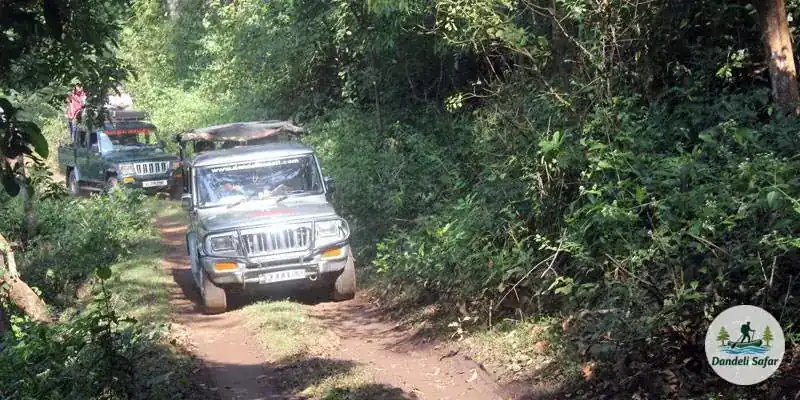
Jeep safari through dense Dandeli forest trails for wildlife spotting adventure

Dandeli Jungle Safari Guide: Kali Tiger Reserve Routes & Permits

This practical jungle safari guide explains how jeep safaris inside the Kali Tiger Reserve (KTR) are organised, what the typical permit and timing considerations look like, realistic expectations for wildlife sightings, and how to prepare for forest rules and responsible viewing. The aim is to help travellers plan jeep-safari outings with an operational mindset—book permits early, choose suitable time slots, respect forest department regulations, and arrive prepared for photography and a patient pace of wildlife watching. Permits and timing: Safari slots and permits are managed by the forest department and often divide into morning and afternoon windows. Morning drives typically leave before sunrise and can last until late morning; evening drives begin in the afternoon and return around dusk. Because the number of vehicles and guests per slot is limited, it is helpful to share your preferred date range early and accept nearby alternate dates if your ideal slot is already reserved. Entry gates and routes: Popular entry gates into KTR include Kulgi and surrounding checkposts, and the route you use will determine how long drives take and which habitats you will visit. Some gates focus on river-edge habitats while others lead to mixed deciduous and dense-canopy areas where different species are more likely to appear. Discuss route and gate options with your operator so you can align the drive with your wildlife interests. What to expect on sightings: Wildlife sightings are variable and influenced by season, temperature and recent rainfall. The reserve hosts species such as gaur, elephants, deer, Malabar giant squirrels, hornbills and numerous bird species; large cats are present but sightings are rare and cannot be promised. Guides and trackers increase the likelihood of meaningful observations, and patient, quiet behaviour combined with an early or late-day schedule often yields the best opportunities. Responsible conduct: Follow the guide and forest department rules closely—remain inside the authorised vehicle, avoid loud noises, do not feed wildlife, and do not litter. Photographic flash is discouraged for sensitive species. Respect safe viewing distances and the permit limits that help keep disturbance low for animals. Preparing for comfort and photography: Wear neutral-coloured clothing and carry modest binoculars for general viewing. For photographers, a telephoto lens and a compact tripod or monopod help with steady shots from the jeep; carry silica pouches for optics in humid months. Also bring a light jacket for early mornings and basic motion-sickness remedies if you are prone to discomfort on bumpy tracks. Seasonal considerations: Post-monsoon and winter months (October–February) often provide pleasant temperatures and easier wildlife movement near water sources, but each season yields different viewing benefits—monsoon drives showcase dramatic landscapes while dry months concentrate animal movement near remaining waterholes. Operators will advise on the practicalities of each season when you discuss dates. Logistics and accessibility: Arrive at gates at least 30–45 minutes before the scheduled reporting time to finish permits and briefings. Carry government ID for all guests as permit issuance requires verification. If any member of your group has mobility concerns, request accessible vehicle options in advance. Final note: A jeep safari is an opportunity to observe wildlife ethically and patiently. Managing expectations, respecting local rules, and choosing experienced guides are the most reliable ways to make the experience rewarding while protecting the reserve's ecological balance.

Real Nature, Real Adventure

Explore Dandeli with Us

50% OFF White Water Rafting

Exclusive discount when booked with any resort package

₹600₹300/personSAVE ₹300